

-
Research Article
-
An Analysis of Population Distribution Content in the 2022 Revised Social Studies Textbooks for 5th Grade Elementary Students
2022 개정 초등 5학년 사회과 교과용 도서의 인구 분포 관련 내용 분석
-
Boksang Yoon
윤복상
- The population imbalance in South Korea is currently intensifying. The unipolar system centered on the Seoul metropolitan area has widened the population …
현재 대한민국의 인구 불균형 현상은 갈수록 심화하고 있다. 수도권 중심의 일극 체제로 수도권과 비수도권 사이의 인구 격차가 더 심해지고 있으며, 여러 부작용이 …
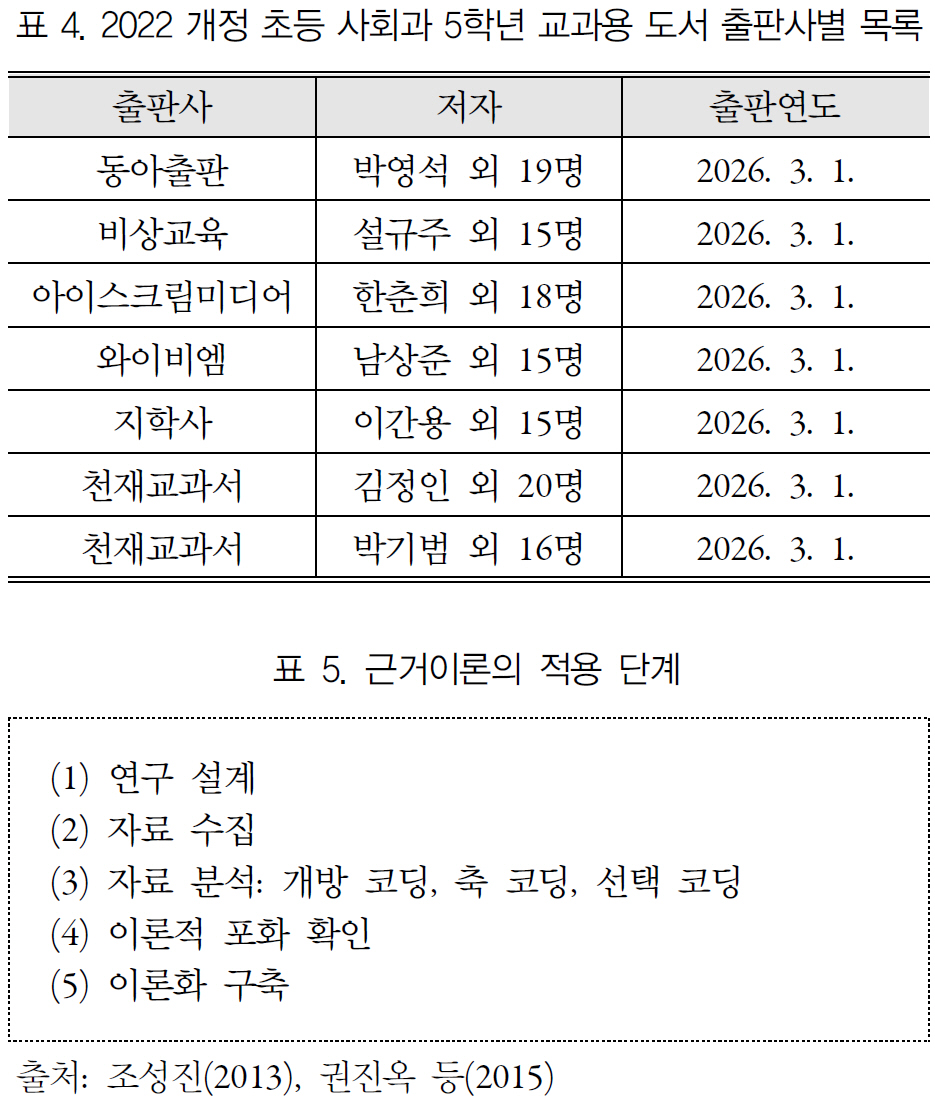
- The population imbalance in South Korea is currently intensifying. The unipolar system centered on the Seoul metropolitan area has widened the population gap between metropolitan and non-metropolitan areas, causing various adverse effects. To alleviate this regional population imbalance, there is a growing interest in and social consensus on balanced development. Notably, the field of education has begun to focus on ensuring that students recognize the severity of population imbalance and internalize the value of balanced development. In fact, compared to the 2015 Revised Curriculum, the 2022 Revised Social Studies Curriculum has strengthened contents that explore the problems caused by population imbalance and their potential solutions. This study aims to examine the core contents and areas in need of improvement by analyzing the units related to population distribution in the textbooks currently used in the first semester of the fifth grade in elementary school. The scope of analysis was set to the units concerning population distribution within a total of seven types of fifth-grade, first-semester elementary social studies textbooks. As for the research method, a grounded theory analysis was conducted on the textbook content. In parallel, interviews with in-service teachers were carried out to deeply examine pedagogical suitability in actual classroom settings, learner comprehension, and implications for improvement. By critically reviewing how the units related to population distribution in elementary social studies textbooks address the phenomenon of population imbalance, this study will contribute to presenting effective measures to foster students' values and competences regarding balanced development.
- COLLAPSE
현재 대한민국의 인구 불균형 현상은 갈수록 심화하고 있다. 수도권 중심의 일극 체제로 수도권과 비수도권 사이의 인구 격차가 더 심해지고 있으며, 여러 부작용이 야기되었다. 지역별 인구 불균형의 해소를 위하여 균형발전에 대한 관심이 높으며, 사회적인 공감대를 얻고 있다. 특히, 교육 분야에서도 학생들이 인구 불균형 현상의 심각성을 알고 균형발전의 가치를 내면화하는 것에 주목하기 시작하였다. 실제 2015 개정 교육과정과 비교하여, 2022 개정 교육과정 사회과에서는 인구 불균형 현상이 가져올 문제점과 해결 방안에 대하여 탐구하는 내용이 강화되었다. 이 연구는 현재 초등학교 5학년 1학기에서 사용되는 교과용 도서들의 인구 분포 관련 단원을 분석하여 핵심이 되는 내용과 보완이 필요한 부분들을 살펴보고자 하였다. 총 7종의 초등학교 5학년 1학기 사회과 교과용 도서의 내용 중 인구 분포와 관련된 단원들을 분석의 범위로 설정하였다. 연구 방법으로는 교과서 내용에 관한 근거이론 분석을 수행하였으며, 이와 병행하여 현직 교사를 대상으로 한 면담 조사를 실시함으로써 실제 수업 상황에서의 교수 적합성과 학습자 이해도, 그리고 개선을 위한 시사점 등을 심층적으로 확인하였다. 이 연구는 초등 사회과 교과용 도서의 인구 분포 관련 단원의 인구 불균형 현상을 다루는 방법을 비판적으로 고찰하여, 학생들의 균형발전에 관한 가치와 역량을 기를 수 있는 실효성 있는 방안을 제시하는 데 기여할 것이다.
-
An Analysis of Population Distribution Content in the 2022 Revised Social Studies Textbooks for 5th Grade Elementary Students
-
Research Article
-
Exploring Directions for the Composition of Elementary Social Studies Localized Textbook in Connection with 5 Mega-Regions and 3 Special Provinces for Balanced National Growth
5극3특 국가균형성장 연계 초등 사회과 지역화 교재 구성 방향 탐색
-
Chan Woo Lee
이찬우
- This study aims to discuss directions for composing localized textbooks in elementary social studies in connection with the mega-regions established under the …
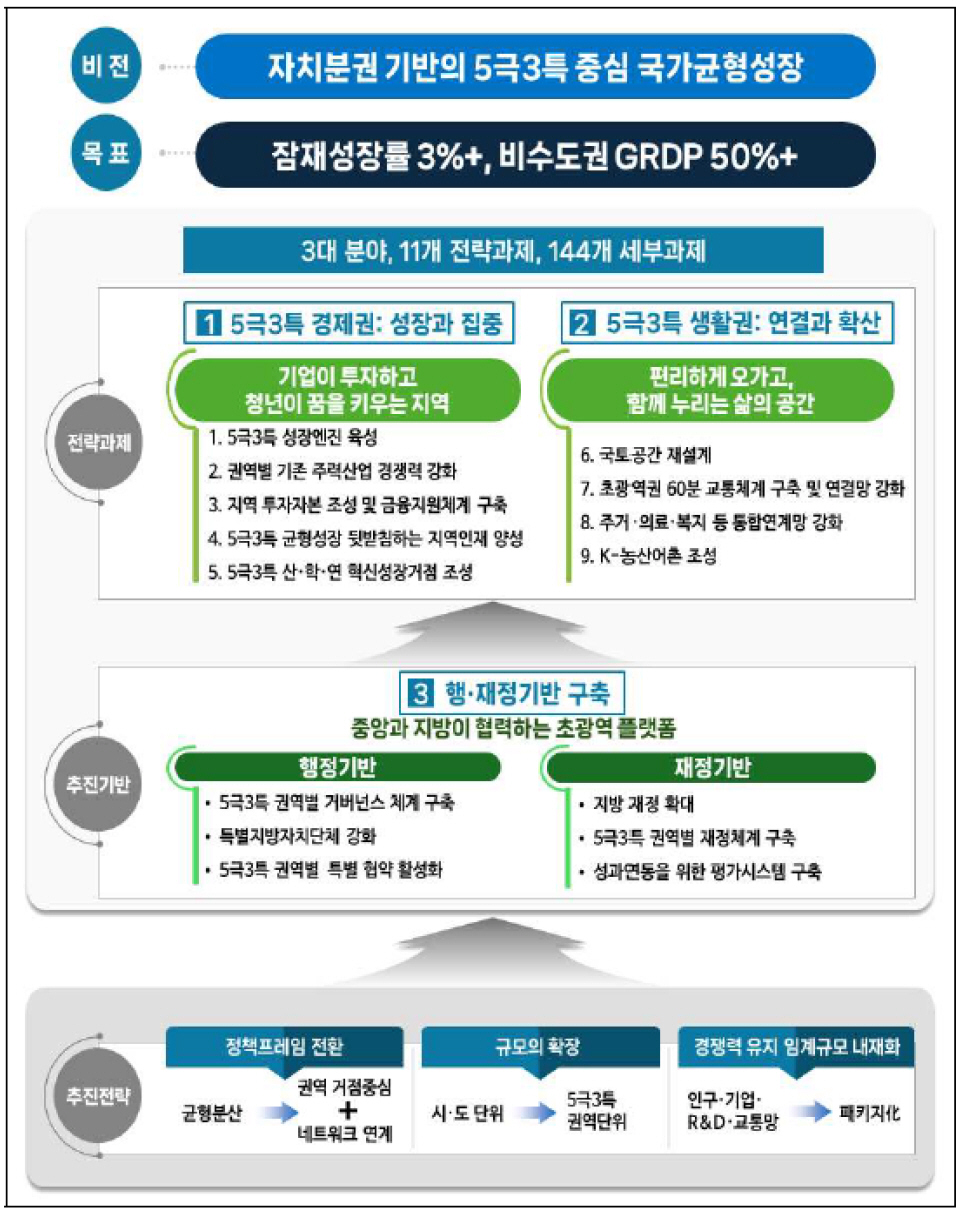
본 연구는 5극3특 국가균형성장 정책에 따라 재편되는 초광역 권역과 연계한 초등 사회과 지역화 교재의 구성 방향 논의를 목적으로 한다. 이를 위해 초등 …
- This study aims to discuss directions for composing localized textbooks in elementary social studies in connection with the mega-regions established under the 5 Mega-Regions and 3 Special Provinces for Balanced National Growth. To this end, it comparatively analyzed the external formats and content structures of 17 fourth-grade localized textbooks. The analysis identified changes such as the expansion of textbook titles and covers reflecting regional characteristics, lesson-based content organization, and the provision of digital materials. However, limitations were also found, including structures subordinate to the unit system of the government-authorized social studies textbooks, the passive application of the localization of method, and disparities across regions. Based on these findings, this study proposes organizing mega-region learning content that reflects the relational concept of region and a multi-scalar approach, securing the status of an independent localized textbook that combines the localization of content and method, establishing a mega-region-level development and publication system for localized textbook centered on regional experts, the development of digital localized textbooks and discussion on the open use of localized textbooks.
- COLLAPSE
본 연구는 5극3특 국가균형성장 정책에 따라 재편되는 초광역 권역과 연계한 초등 사회과 지역화 교재의 구성 방향 논의를 목적으로 한다. 이를 위해 초등 4학년 지역화 교재 17종의 외형 체제와 내용 체계를 비교 분석하였다. 분석 결과 지역 특색을 반영한 교재 명칭 및 표지 구성이 확대되었고, 차시 학습 중심의 내용 구성 및 디지털 자료 제공 등의 변화를 확인할 수 있었다. 그러나 검정 사회 교과서 단원 체제에 종속된 구성, 방법의 지역화에 대한 소극적 적용, 지역별 편차 등의 한계점을 확인하였다. 분석 결과를 바탕으로 본 연구는 5극3특 국가균형성장과 연계한 지역화 교재의 구성 방향으로 관계적 지역 개념 및 다중스케일적 접근을 반영한 초광역 권역 학습 내용 구성, 내용의 지역화와 방법의 지역화를 병행하는 독립된 지역화 교재로서의 위상 확보, 권역 단위 지역 전문가 중심 지역화 교재 개발·편찬 체제 구축, 디지털 지역화 교재 개발과 개방적인 지역화 교재 활용 논의 등을 제안하였다.
-
Exploring Directions for the Composition of Elementary Social Studies Localized Textbook in Connection with 5 Mega-Regions and 3 Special Provinces for Balanced National Growth
-
Research Article
-
An Analysis of Digital Media Landscapes and Inquiry Prompts in the Geography Sections of Approved Elementary Social Studies Textbooks - Focusing on Walter Benjamin’s Concept of Aura -
초등 사회과 검정교과서 지리 영역의 디지털 매체 경관과 탐구 활동 발문 분석 - 벤야민의 아우라 개념을 중심으로 -
-
Hyunju Kim
김현주
- This study examines, through textbook analysis, how digital media landscapes and inquiry activity prompts presented in the geography sections of approved elementary …
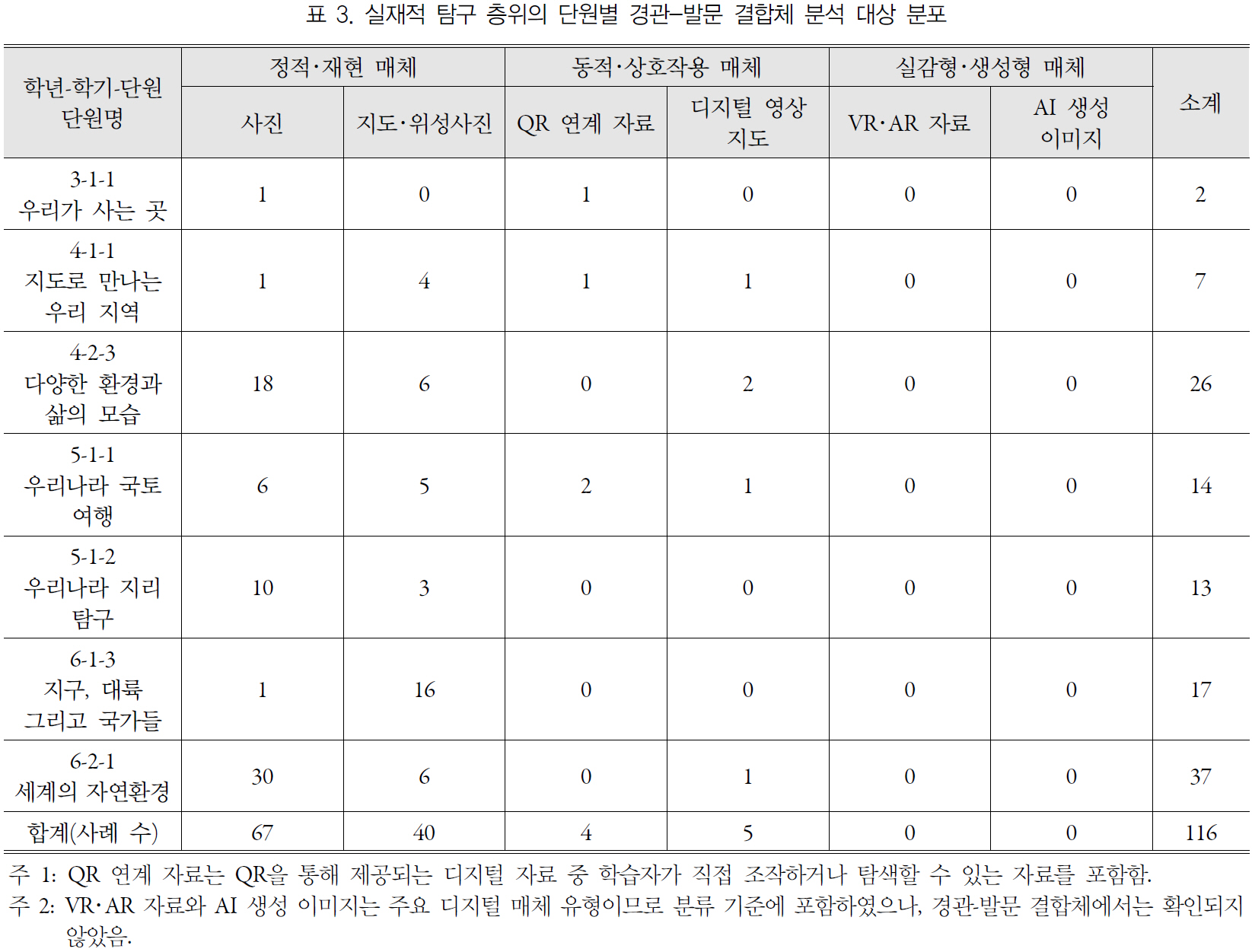
디지털 전환의 가속화와 함께 지리교육에서 디지털 매체 경관의 활용이 확대되고 있다. 본 연구는 초등 지리교육의 맥락에서 벤야민의 아우라 개념을 이론적 준거로 삼아, …
- This study examines, through textbook analysis, how digital media landscapes and inquiry activity prompts presented in the geography sections of approved elementary social studies textbooks structure learners’ landscape experiences within the context of elementary geography education through Walter Benjamin’s concept of aura. To this end, aura was reconstructed into four analytical dimensions: distance, temporality, uniqueness, and contextuality. A qualitative document analysis was conducted on 116 landscape-prompt units identified in three approved elementary social studies textbooks developed under the 2022 Revised National Curriculum. The findings revealed that most landscape-prompt units tended to diminish aura by presenting landscapes as immediately accessible and consumable visual information. In contrast, some cases partially preserved aura by encouraging learners to explore the historical formation, uniqueness, and relational networks of landscapes. These findings suggest that the diminishment or preservation of aura is determined not by digital media themselves but by the ways landscapes are represented and inquiry prompts are designed. Based on the findings, this study proposes three design principles for fostering auratic experiences: providing interpretive openness, restoring temporal layers, and recovering the uniqueness and relational networks of landscapes. By extending Benjamin’s concept of aura to the context of geography education, this study offers a new analytical framework for examining digital media landscapes and provides implications for enhancing the qualitative dimensions of landscape learning in the digital age.
- COLLAPSE
디지털 전환의 가속화와 함께 지리교육에서 디지털 매체 경관의 활용이 확대되고 있다. 본 연구는 초등 지리교육의 맥락에서 벤야민의 아우라 개념을 이론적 준거로 삼아, 초등 사회과 검정교과서 지리 영역에 제시된 디지털 매체 경관과 탐구 활동 발문이 학습자로 하여금 경관을 어떤 방식으로 경험하게 하는지를 교과서 분석을 통해 살펴보았다. 이를 위해 아우라를 거리성, 시간성, 유일성, 맥락성의 네 차원으로 재구성하고, 2022 개정 교육과정에 따른 검정교과서 3종의 경관-발문 결합체 116개를 질적 문헌 분석하였다. 분석 결과, 대부분의 결합체는 경관을 즉각적으로 소비 가능한 시각 정보로 제시함으로써 아우라를 소거하는 경향을 보였으나, 일부는 경관의 역사성, 고유성, 관계망 탐색 유도를 통해 아우라를 부분적으로 보존하고 있었다. 이에 본 연구는 아우라적 경험을 촉진하기 위한 설계 원리로 해석적 여백의 확보, 시간적 층위의 회복, 경관의 고유성과 관계망의 복원을 제안하였다. 본 연구는 벤야민의 아우라 개념을 지리교육의 맥락으로 확장하여 디지털 매체 경관에 대한 새로운 분석 틀을 제시하고, 디지털 전환 시대 경관 학습의 질적 방향을 모색하였다는 점에서 의의를 지닌다.
-
An Analysis of Digital Media Landscapes and Inquiry Prompts in the Geography Sections of Approved Elementary Social Studies Textbooks - Focusing on Walter Benjamin’s Concept of Aura -
-
Research Article
-
A Study on the Representation of Spatial Relationships in Domestic Population Migration in Elementary Social Studies Textbooks and Directions for Classroom Practice
초등 사회과 교과서에 나타난 국내 인구이동의 공간관계 재현 양상과 수업 실천 방향 연구
-
Jiyoung Lee
이지영
- This study analyzes the spatial relationships of domestic population migration in the 5th-grade unit ‘Exploring the Geography of Korea’ (2022 revised curriculum), …
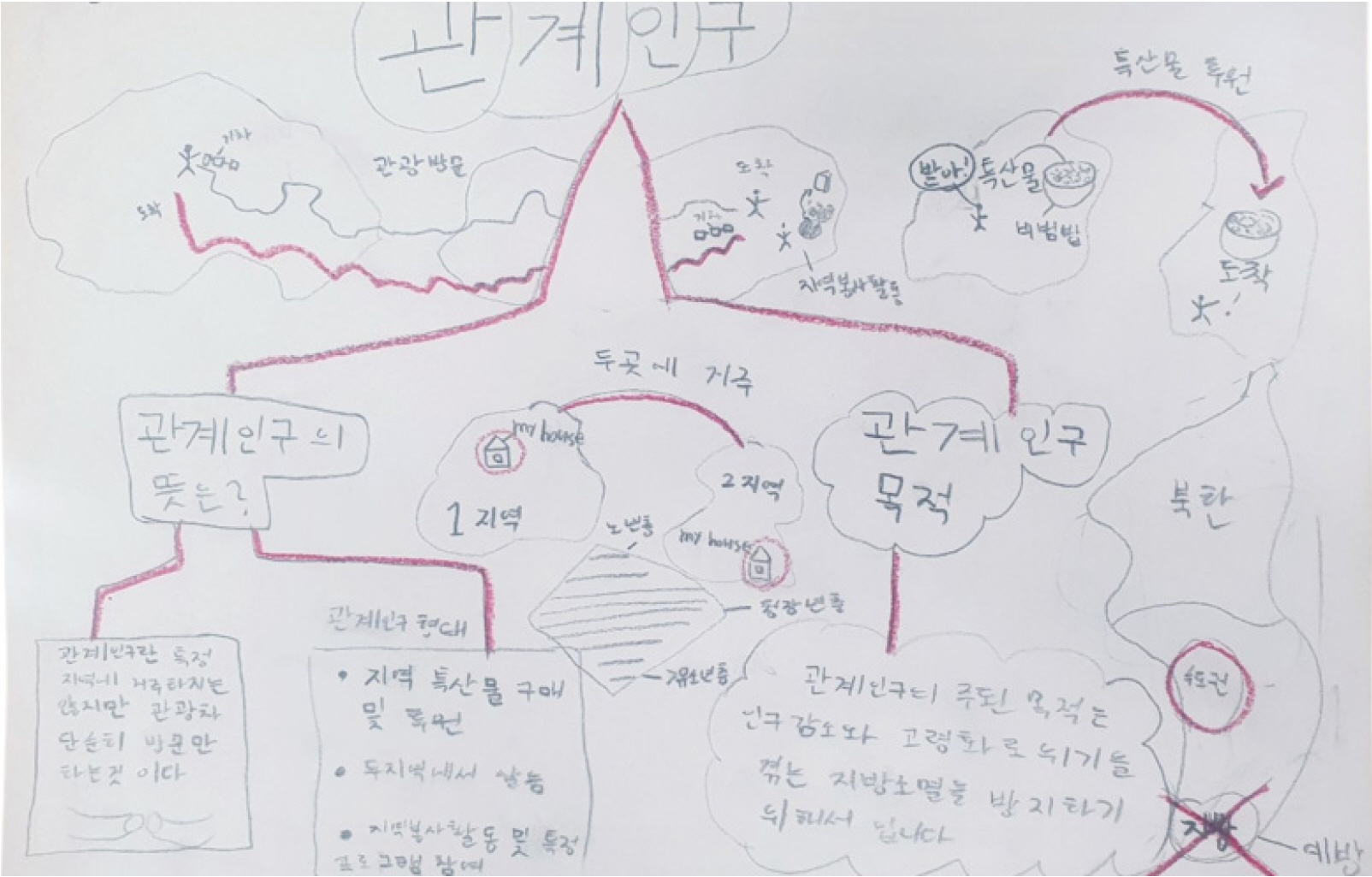
본 연구는 2022 개정 교육과정에 따른 초등 사회과 5학년 ‘우리나라 지리 탐구’에 재현된 국내 인구이동의 공간관계를 분석하고, 이를 바탕으로 수업을 재구성하여 실천함으로써 …
- This study analyzes the spatial relationships of domestic population migration in the 5th-grade unit ‘Exploring the Geography of Korea’ (2022 revised curriculum), and explores how students understand migration as spatial knowledge through subsequent lesson redesign and implementation. Using Catling’s concept of spatial relations as a starting point, an analytical framework was constructed with three levels: structural (grounded in macro-coordination theory), agency-centered (grounded in micro-behavioral theory), and expanded spatial relations (grounded in Massey’s relational space and Tuan’s concept of place, encompassing migration, non-migration, multiple residency, and continuity of relationships). A qualitative content analysis of eight textbooks showed that structural spatial relations—centered on population concentration in the Seoul metropolitan area—were prominent, while agency-centered and expanded relations appeared only to a limited extent. Lessons were subsequently redesigned and implemented in a fifth-grade classroom, in which students were partially observed moving beyond structural explanations toward understanding individual decision-making, the experiences of non-migrants, and relationships with place. This study thus examines domestic population migration through the qualitative dimensions of spatial relations and connects this analysis to classroom practice.
- COLLAPSE
본 연구는 2022 개정 교육과정에 따른 초등 사회과 5학년 ‘우리나라 지리 탐구’에 재현된 국내 인구이동의 공간관계를 분석하고, 이를 바탕으로 수업을 재구성하여 실천함으로써 학생들이 인구이동을 어떠한 공간지식으로 이해할 수 있는지를 탐색하는 데 목적이 있다. 이를 위해 Catling의 공간관계 개념을 출발점으로 삼아 구조적 공간관계, 행위자 중심 공간관계, 확장된 공간관계의 세 수준으로 분석틀을 구성하였다. 구조적 공간관계는 거시조정이론, 행위자 중심 공간관계는 미시행태이론을 이론적 준거로 하였으며, 확장된 공간관계는 Massey의 관계적 공간론과 Tuan의 장소 개념을 바탕으로 이동과 비이동, 다중거주 및 관계 지속의 관점을 포함하였다. 초등 사회과 교과서 8종을 의미 단위 기준으로 질적 내용분석한 결과, 수도권 집중을 중심으로 구조적 공간관계가 두드러졌고, 행위자 중심 공간관계와 확장된 공간관계는 제한적으로 나타났다. 이를 바탕으로 5학년 학급을 대상으로 수업을 재구성하여 실천한 결과, 학생들이 구조적 설명을 넘어 개인의 선택 과정, 비이동자의 경험, 장소와의 관계를 구성하려는 모습을 일부 확인할 수 있었다. 본 연구는 국내 인구이동을 공간관계의 질적 층위에서 분석하고, 이를 수업 실천과 연결하여 살펴보았다.
-
A Study on the Representation of Spatial Relationships in Domestic Population Migration in Elementary Social Studies Textbooks and Directions for Classroom Practice
-
Research Article
-
Constructing a Multidimensional Assessment Framework for Community Mapping-Based Elementary Geography Lessons
커뮤니티 매핑 기반 초등 지리수업의 다차원 평가체계 구성
-
Kanghee Lee · Jinhee Lee
이강희 · 이진희
- This study constructed a multidimensional assessment framework to evaluate the complex educational outcomes of community mapping in a balanced manner rather than …
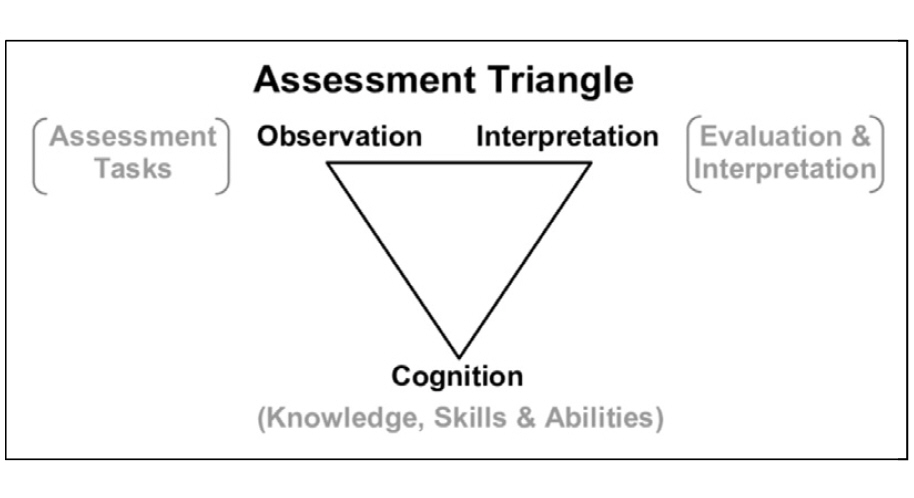
본 연구는 커뮤니티 매핑의 복합적인 교육적 성과를 특정 역량에 한정하지 않고 균형 있게 평가할 수 있는 다차원 평가체계를 구성하는 데 목적이 있다. …
- This study constructed a multidimensional assessment framework to evaluate the complex educational outcomes of community mapping in a balanced manner rather than focusing on a single competency. The framework comprised 72 items across four domains: spatial thinking, global citizenship, digital literacy, and attitudes toward geography learning. Eight experts reviewed the content, and pilot testing was conducted with 37 fourth-grade students. All items met the content validity ratio criterion, and each instrument showed acceptable internal consistency. The three self-report domains were significantly and positively correlated, whereas none was significantly associated with spatial thinking. These findings suggest that the educational outcomes of community mapping should be assessed across all four domains and interpreted comprehensively, while preserving the distinctive nature of the evidence from each domain, rather than reduced to a single domain or aggregate score.
- COLLAPSE
본 연구는 커뮤니티 매핑의 복합적인 교육적 성과를 특정 역량에 한정하지 않고 균형 있게 평가할 수 있는 다차원 평가체계를 구성하는 데 목적이 있다. 공간적 사고력, 세계시민성, 디지털 리터러시 및 지리 학습 태도의 네 영역에서 72문항을 구성하고, 전문가 8인의 내용 검토와 초등학교 4학년 37명 대상 예비검사를 실시하였다. 모든 문항이 CVR 기준을 충족하였으며, 각 도구는 양호한 내적 일관성을 보였다. 자기보고식 세 영역은 유의한 정적 상관을 보였으나 공간적 사고력과는 유의한 관계가 나타나지 않았다. 이는 커뮤니티 매핑의 성과를 어느 한 영역이나 총점으로 환원하지 않고, 네 영역을 함께 평가하되 영역별 증거의 특성을 고려하여 종합적으로 해석할 필요가 있음을 시사한다.
-
Constructing a Multidimensional Assessment Framework for Community Mapping-Based Elementary Geography Lessons
-
Research Article
-
Micro-Reconstruction of Spatial Heterogeneity - Interpreting Space through Local Landscape Reading -
공간적 이질성의 미시적 재구성 - 지역 경관 읽기를 통한 공간 해석 -
-
Jisu Park
박지수
- This study aims to reconceptualize spatial heterogeneity not as a phenomenon explained primarily by interregional differences or statistical variability, but as a …
본 연구는 공간적 이질성을 지역 간 차이나 통계적 변동성으로 이해하는 기존 관점을 넘어, 지역 내부에서 경관 요소들이 배열되고 관계를 형성하는 과정 속에서 …
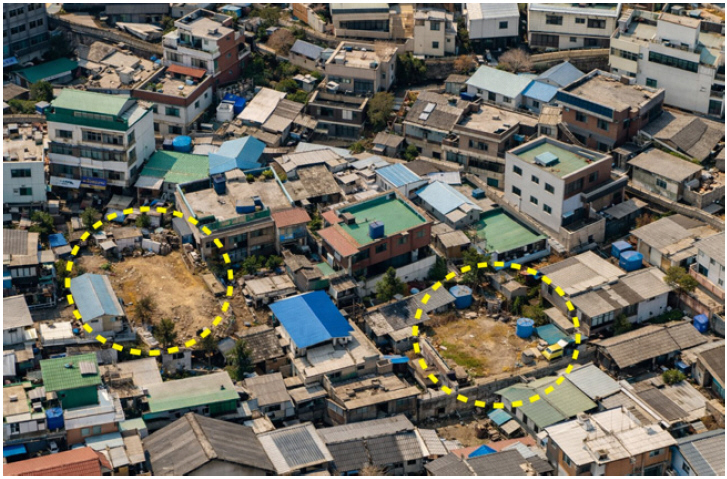
- This study aims to reconceptualize spatial heterogeneity not as a phenomenon explained primarily by interregional differences or statistical variability, but as a structural characteristic emerging from the arrangement and relationships of landscape elements within a locality. To achieve this goal, a qualitative case study was conducted in residential areas of Dongsam-dong, Yeongdo-gu, and Ami-dong, Seo-gu, Busan. The study combined micro-scale observation, walking-based field observation, ground-level photography, and drone imagery. Analysis focused on interpreting spatial heterogeneity through landscape reading, particularly in terms of spatial arrangement, boundaries, and transitions. The findings reveal that even within the same residential area, spatial characteristics are microscopically differentiated according to the arrangement of landscape elements such as building configurations, alley structures, lighting conditions, and visual openness. Spatial boundaries were not fixed by administrative divisions or physical discontinuities; rather, they were experientially perceived at points where multiple landscape elements changed simultaneously during movement through space. Transitional zones emerged as areas in which different spatial characteristics overlapped, suggesting that space should be understood as a relational and process-oriented structure rather than a fixed category. Drone imagery served as a complementary source for examining whether spatial structures identified through ground-level observation were consistently represented at a broader observational scale. This study contributes to geographic scholarship by reconceptualizing spatial heterogeneity as a structural property formed through internal spatial arrangements and relationships. Furthermore, it demonstrates that spatial interpretation through landscape reading encourages learners to view space not as a homogeneous background but as an object of inquiry and interpretation. The findings suggest that such an approach can serve as a meaningful educational strategy for fostering spatial thinking in geography education.
- COLLAPSE
본 연구는 공간적 이질성을 지역 간 차이나 통계적 변동성으로 이해하는 기존 관점을 넘어, 지역 내부에서 경관 요소들이 배열되고 관계를 형성하는 과정 속에서 나타나는 구조적 특성으로 재해석하는 데 목적이 있다. 이를 위해 부산광역시 영도구 동삼동과 서구 아미동의 주거지 일대를 연구 대상으로 선정하고, 미시적 관찰에 기반한 걷기 관찰, 지상 사진 촬영, 드론 이미지 기록을 결합한 질적 사례연구를 수행하였다. 분석은 경관 읽기를 통해 공간적 이질성이 배열, 경계, 전이의 형태로 어떻게 나타나는지를 해석하는 데 초점을 두었다. 연구 결과, 동일한 주거지 내부에서도 건물 배치, 골목의 형태, 채광 조건, 시야 구조 등 경관 요소의 배열 방식에 따라 공간 성격이 미시적으로 분화되는 것으로 나타났다. 또한 공간적 경계는 행정적 구획이나 물리적 단절에 의해 고정적으로 형성되는 것이 아니라, 이동 과정에서 복수의 경관 요소가 동시에 변화하는 지점에서 경험적으로 인식되었다. 전이 구간은 서로 다른 공간 성격이 중첩되는 과정으로 나타났으며, 공간은 고정된 범주보다 관계적·과정적 구조로 이해될 필요가 있음을 보여주었다. 드론 이미지는 지상 관찰을 통해 확인된 공간 구조가 상공 스케일에서도 일관되게 나타나는지를 검토하는 보조적 자료로 활용되었다. 본 연구는 공간적 이질성을 지역 내부의 배열과 관계 속에서 형성되는 구조적 특성으로 재개념화하였다는 점에서 의의를 지닌다. 또한 경관 읽기를 기반으로 한 공간 해석 과정이 공간을 균질한 배경이 아닌 해석의 대상으로 인식하게 함으로써, 지리교육에서 공간적 사고를 함양하기 위한 교육적 접근으로 활용될 수 있음을 시사한다.
-
Micro-Reconstruction of Spatial Heterogeneity - Interpreting Space through Local Landscape Reading -
-
Research Article
-
A Study on the Concept of GIS in Geography Education in Secondary Schools and Its Educational Implications
중등 지리교육에서 GIS 개념에 대한 고찰과 교육적 제언
-
Seo-on Choi · Youngho Kim
최서온 · 김영호
- The 2022 revised national curriculum expanded the weight of GIS in the geography subject, yet it defined GIS as “geographic information technology.” …
2022 개정 교육과정은 지리 교과에서 GIS 비중을 확대하는 유의미한 결과를 가져왔다. 그러나 GIS는 ‘지리정보기술’ 중 하나로 개념화되었다. 이는 모학문에서 확장되어 온 GIS …
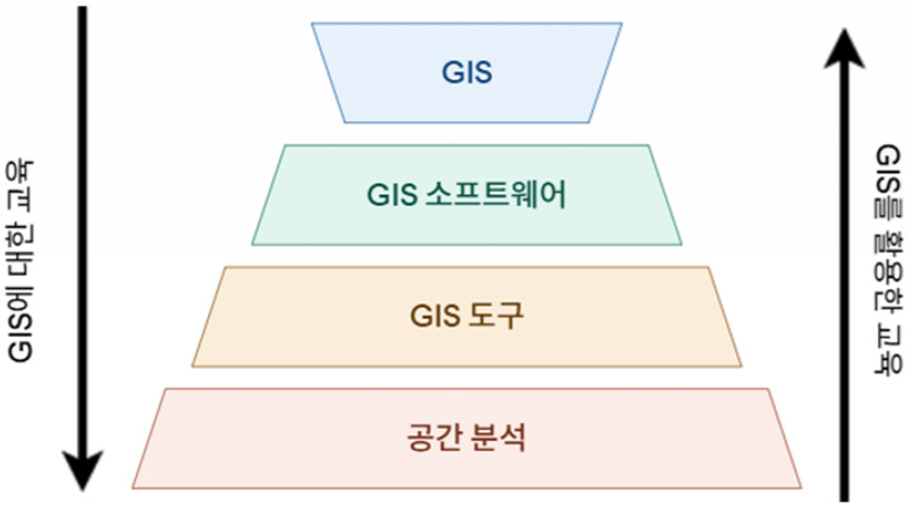
- The 2022 revised national curriculum expanded the weight of GIS in the geography subject, yet it defined GIS as “geographic information technology.” This definition does not fully reflect the concept of GIS as it has expanded within the parent discipline. Accordingly, this study reviews how the concept of GIS developed into Geographic Information Science(GIScience), and examines the concept of GIS in geography education of secondary schools through domestic research trends and the 2022 revised curriculum. It then analyzes the gap that exists between the concept of GIS in GIScience and that in geography education of secondary schools. In the academic field, GIS is understood as a conceptual framework(GISc) encompassing the modeling and analysis of geographic information and the theoretical questions it raises, whereas in secondary geography education it remains confined to an instrumental and functional dimension(GISs). In the curriculum, GIS should be understood as an expanded concept that goes beyond a technical tool. Only when those who teach and use GIS first grasp its conceptual status can inquiry using GIS lead to the enhancement of geographic thinking.
- COLLAPSE
2022 개정 교육과정은 지리 교과에서 GIS 비중을 확대하는 유의미한 결과를 가져왔다. 그러나 GIS는 ‘지리정보기술’ 중 하나로 개념화되었다. 이는 모학문에서 확장되어 온 GIS 개념을 온전히 반영하지 못한다. 본 연구는 GIS 개념이 지리정보과학(GIScience)으로 발전한 과정을 정리하고, 국내 연구 동향과 2022 개정 교육과정을 통해 중등 지리교육에서의 GIS 개념을 검토하였다. 그리고 지리정보과학과 중등 지리교육에서의 GIS 개념 사이에 존재하는 간극을 분석하였다. 학문 영역에서 GIS는 지리 정보의 모델링·분석과 이론적 물음을 포괄하는 개념적 틀(GISc)로 이해되는 반면, 중등 지리교육에서는 도구적·기능적 차원(GISs)에 머물러 있었다. 교육과정에서 GIS는 기술적 도구를 넘어선 확장된 개념으로 이해되어야 한다. 이를 가르치고 활용하는 주체가 그 개념적 위상을 먼저 이해할 때 GIS를 활용한 탐구가 지리적 사고의 신장으로 이어질 수 있을 것이다.
-
A Study on the Concept of GIS in Geography Education in Secondary Schools and Its Educational Implications
-
Research Article
-
Characteristics of Climate Change Education Implemented in the Geography Curriculum and Textbooks - Focusing on Climate Literacy -
지리 교육과정과 교과서에 나타난 기후변화 교육의 특징 - 기후 리터러시를 중심으로 -
-
Kyungrim Harm · JaYeon Yang
함경림 · 양자연
- The purpose of this study is to identify the characteristics of climate change education in current geography education by analysing climate change-related …
본 연구의 목적은 2022 개정 지리 교육과정과 교과서에 나타난 기후변화 관련 내용을 분석하여 현행 지리교육에서의 기후변화 교육의 특징을 파악하는 데 있다. 우선, …
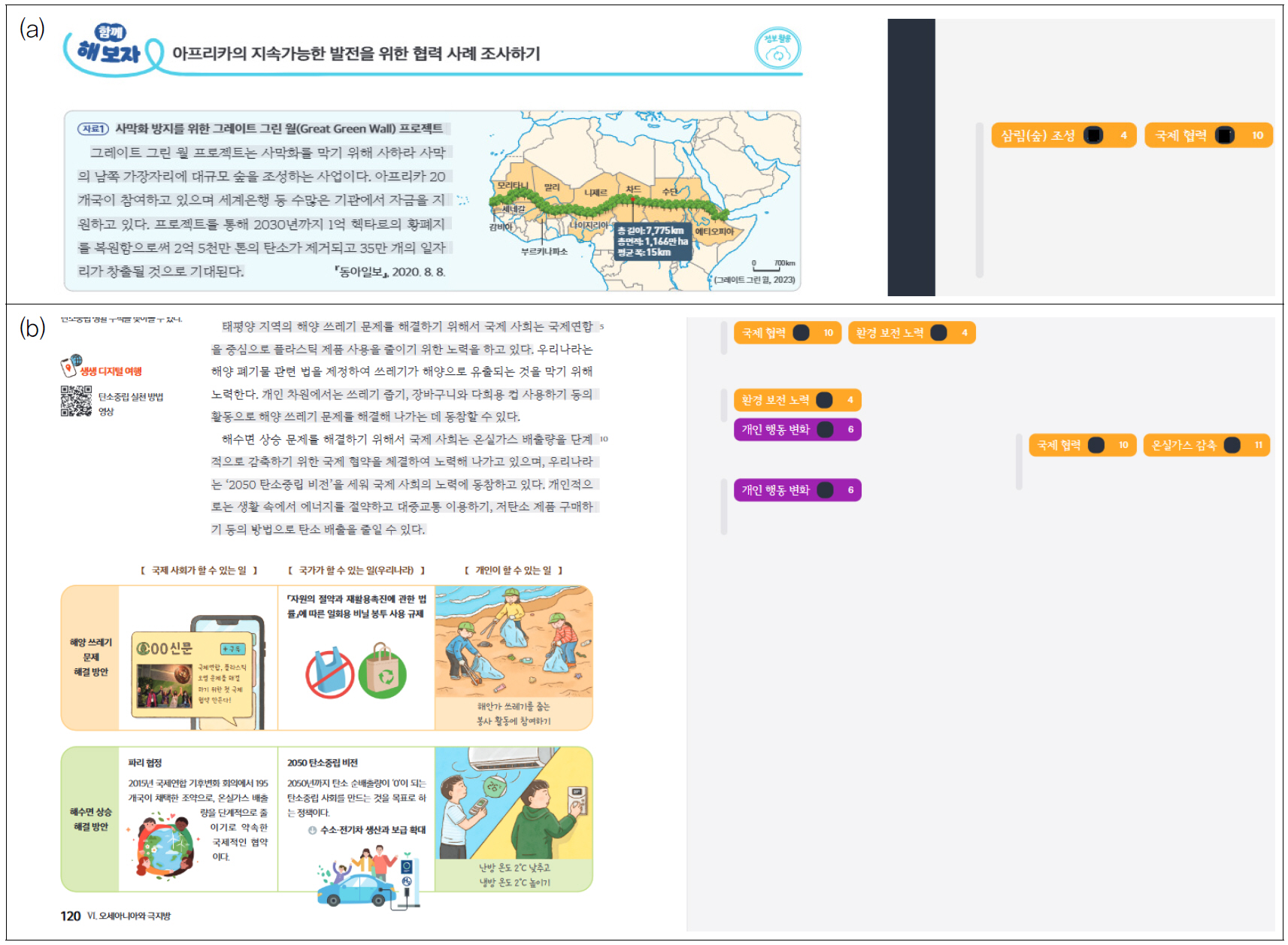
- The purpose of this study is to identify the characteristics of climate change education in current geography education by analysing climate change-related content in the 2022 revised curriculum and textbooks. In the 2022 revised social studies curriculum, climate change education originates from an interest in natural environmental changes in primary school, deepens into climate impacts, natural disasters, sustainable development, and practice in lower secondary school, and expands into ecological transition, adaptation and mitigation, spatial inequality and justice, and solidarity and practice in upper secondary school. Textbooks for lower secondary school “Social Studies” and upper secondary school “Integrated Social Studies”—corresponding to the compulsory secondary curriculum stage—were analysed based on key climate literacy elements: dealing with content knowledge, knowledge generation and evaluation, information and communication, and normative evaluation. Findings reveal that, firstly, textbook descriptions are heavily concentrated on dealing with content knowledge, while competencies in generating knowledge, analysing information, and making normative evaluation remain insufficient. Secondly, although concepts like sustainable development, global warming, and sea-level rise appear with high frequency, information is merely listed without clear conceptual definitions. Thirdly, from the perspective of normative evaluation, textbooks remain confined to repeating simple practical actions, with a low proportion devoted to critical literacy for critically examining climate policies or value conflicts.
- COLLAPSE
본 연구의 목적은 2022 개정 지리 교육과정과 교과서에 나타난 기후변화 관련 내용을 분석하여 현행 지리교육에서의 기후변화 교육의 특징을 파악하는 데 있다. 우선, 2022 개정 사회과 교육과정에서 기후변화 교육은 초등학교의 자연환경 변화와 기후변화에 대한 관심에서 출발하여, 중학교에서는 기후변화의 영향·자연재해·지속가능한 발전과 실천으로 심화되고, 고등학교에서는 생태전환, 적응과 완화, 공간적 불평등과 정의, 연대와 실천 등으로 확장되는 것으로 나타났다. 2022 개정 사회과 교육과정 중에서도 중등교육 공통 교육과정 단계에 해당하는 중학교 사회, 고등학교 통합사회 교과서에 구현된 기후변화 교육 내용을 기후 리터러시의 주요 요소인 내용 지식, 지식 생성과 평가, 정보와 의사소통, 규범적 평가 및 실천의 관점에서 분석하였다. 그 결과, 첫째, 기후변화 관련 서술이 내용 지식 관점에 집중되어 있었으며, 이를 바탕으로 지식을 생성 및 평가하거나 정보를 조사하거나 분석하는 역량, 규범적으로 판단하는 관점은 미비하였다. 둘째, 기후변화에 관한 내용 지식으로 지속가능한 발전, 지구 온난화, 해수면 상승 등이 높은 빈도로 등장했지만 , 명확한 개념 정의 없이 관련 정보들만 단순히 나열되어 서술되고 있었다. 셋째, 규범적 평가 관점에서 볼 때, 기후변화 교육이 단순한 실천 행동을 반복하는 수준에 머물러 있었으며, 사례로 제시된 기후 정책이나 가치 갈등을 비판적으로 검증할 수 있는 비판적 리터러시의 비중은 상대적으로 적은 것으로 나타났다.
-
Characteristics of Climate Change Education Implemented in the Geography Curriculum and Textbooks - Focusing on Climate Literacy -
-
Research Article
-
An Analysis of the Dual Structure of Content Organization in Regional Geography Education - Focusing on the Logic of Scope and the Logic of Relations -
지역지리교육에서의 내용구성의 이중 구조 분석 - 범위 논리와 관계 논리를 중심으로 -
-
Eunju Kwon
권은주
- This study aims to establish a concrete organizing principle through which the relational perspective reflected in the 2022 Revised Korean Social Studies …
본 연구는 2022 개정 사회과(지리 영역) 교육과정에 반영된 관계적 관점이 학교 지역학습에 실질적으로 구현될 수 있도록, 구체적인 조직 원리를 정립하는데 목적이 있다. …
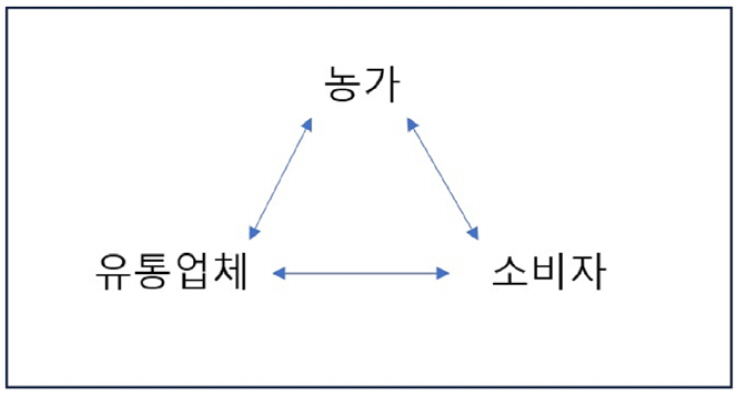
- This study aims to establish a concrete organizing principle through which the relational perspective reflected in the 2022 Revised Korean Social Studies Curriculum (Geography) can be effectively implemented in school regional learning. To this end, the organization of regional learning presented in the curriculum was analyzed through the analytical framework of the Logic of Scope and the Logic of Relations. The analysis revealed that, although the achievement standards and curriculum guidelines are oriented toward a relational perspective, the actual organization of learning content continues to be structured around fixed spatial units such as administrative districts, continents, and regions, resulting in a dual structure in which the Logic of Scope and the Logic of Relations coexist. To bridge the gap between the intended orientation and the organization of learning content, this study proposes the repositioning of the Logic of Scope and the elaboration of the Logic of Relations as principles for restructuring regional learning. Furthermore, it introduces Core Relations, which explain the formation and transformation of regions, together with a Relational Inquiry Framework for applying these relations in classroom practice, thereby providing a systematic inquiry procedure and a practical framework for implementing the relational perspective in school regional learning. By moving beyond the theoretical acceptance of the relational perspective, this study systematizes it into coherent organizing principles and practical guidelines that can be implemented in curriculum design and classroom practice.
- COLLAPSE
본 연구는 2022 개정 사회과(지리 영역) 교육과정에 반영된 관계적 관점이 학교 지역학습에 실질적으로 구현될 수 있도록, 구체적인 조직 원리를 정립하는데 목적이 있다. 이를 위해 교육과정에 제시된 지역학습의 구성 양상을 ‘범위 논리’와 ‘관계 논리’의 관점에서 분석하였다. 분석 결과, 성취기준 및 해설 차원에서는 관계적 관점을 지향하고 있으나, 실제 학습 내용의 편제는 여전히 행정구역, 대륙, 권역 등 고정된 공간 단위를 중심으로 조직되어 ‘범위 논리’와 ‘관계 논리’가 혼재된 이중적 구조를 보였다. 이에 본 연구는 형식과 내용 간 불일치로 인한 간극을 보완하기 위해 ‘범위 논리’의 재위치화와 ‘관계 논리’의 구체화를 지역학습의 재구조화 원리로 제안하였다. 나아가 지역의 형성과 변화를 설명하는 ‘핵심 관계’의 선정과 이를 적용할 ‘관계론적 탐구 프레임워크’를 제시함으로써, 실제 수업에서 관계적 관점을 구현할 수 있는 탐구 절차와 실천적 틀을 제공하였다. 본 연구는 관계적 관점의 이론적 수용을 넘어, 이를 학교 교육과정 및 학교 현장에서 실행가능한 정교한 원리와 지침으로 체계화 했다는 점에서 의의를 지닌다.
-
An Analysis of the Dual Structure of Content Organization in Regional Geography Education - Focusing on the Logic of Scope and the Logic of Relations -
-
Research Article
-
Gender Differences in High School Students’ Experiences of Using Everyday Geospatial Technologies - A Google Earth-Based Community Spatial Inquiry Lesson -
고등학생의 일상적 지리정보기술 활용 경험과 성별 차이 - 구글어스 기반 지역사회 공간 탐구 수업을 중심으로 -
-
Minsuk Son
손민석
- This study examined gender differences in high school students’ experiences of using everyday geospatial technologies during a Google Earth-based community spatial inquiry …
본 연구는 구글어스 기반 지역사회 공간 탐구 수업에 참여한 고등학생을 대상으로 일상적 지리정보기술 활용 경험의 성별 차이를 분석하였다. 이를 위해 기술 수용, …
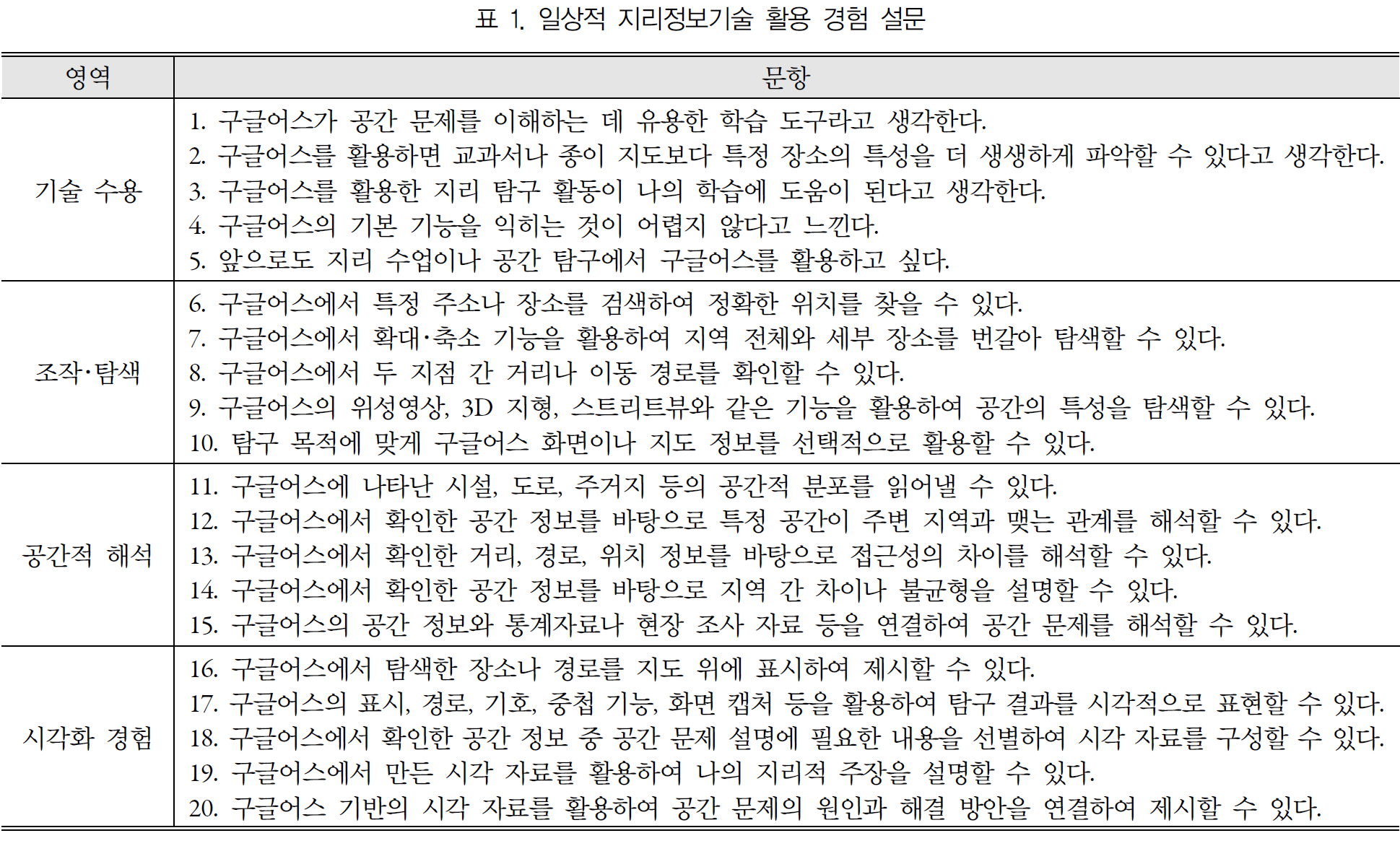
- This study examined gender differences in high school students’ experiences of using everyday geospatial technologies during a Google Earth-based community spatial inquiry lesson. The same survey instrument was administered before and after the lesson to assess four domains: technology acceptance, operation and exploration, spatial interpretation, and visualization experience. A MANCOVA was conducted, followed by ANCOVAs for the four domains, with pre-test scores entered as covariates. Stimulated recall interviews were also conducted to interpret the quantitative findings in relation to students’ actual learning experiences. The results showed that post-test scores were significantly higher than pre-test scores in all four domains for both male and female students. After controlling for pre-test scores, no significant gender difference was found in technology acceptance. Female students had higher adjusted mean scores in two domains-operation and exploration, and visualization experience-whereas male students had a higher adjusted mean score in the spatial interpretation domain. The interviews revealed different patterns in the activities that male and female students focused on and in how they made sense of their experiences using Google Earth. This study extends research on geospatial technology education from its traditional focus on professional GIS to students’ actual experiences of using everyday geospatial technologies. It also provides empirical evidence supporting the need for pedagogical support that accounts for differences in students’ experiences of using Google Earth.
- COLLAPSE
본 연구는 구글어스 기반 지역사회 공간 탐구 수업에 참여한 고등학생을 대상으로 일상적 지리정보기술 활용 경험의 성별 차이를 분석하였다. 이를 위해 기술 수용, 조작·탐색, 공간적 해석, 시각화 경험의 네 영역으로 구성된 설문을 사전·사후에 실시하고, 사전 점수를 통제한 MANCOVA와 ANCOVA를 적용하였다. 또한 자극 회상 인터뷰를 통해 양적 결과의 의미를 실제 수업 경험과 연결하여 해석하였다. 분석 결과, 남학생과 여학생 모두 수업 이후 네 영역의 사후 점수가 통계적으로 유의하게 증가하였다. 사전 점수를 통제한 조정분석 결과, 기술 수용에서는 성별 차이가 나타나지 않았으나, 조작·탐색과 시각화 경험에서는 여학생의 조정 평균이 높았고, 공간적 해석에서는 남학생의 조정 평균이 높았다. 인터뷰에서는 남학생과 여학생이 중점을 둔 활동과 구글어스 활용 경험을 의미화하는 방식에서 서로 다른 양상이 나타났다. 본 연구는 전문 GIS 중심의 지리정보기술 교육 연구를 일상적 지리정보기술의 실제 활용 경험으로 확장하고, 학생들의 서로 다른 구글어스 활용 경험을 고려한 교수학적 지원의 필요성을 뒷받침하는 경험적 근거를 제시한다는 점에서 의의가 있다.
-
Gender Differences in High School Students’ Experiences of Using Everyday Geospatial Technologies - A Google Earth-Based Community Spatial Inquiry Lesson -
-
Research Article
-
A Reliability Analysis of AI-Based Automated Scoring for Text- and Image-Based Responses in Geography Assessment
지리과 텍스트 및 이미지 기반 답안에 대한 AI 자동 채점 신뢰도 분석
-
Hongjun Lee · Minsung Kim
이홍준 · 김민성
- The purpose of this study was to examine the applicability of AI-based automated scoring for text- and image-based responses in geography assessment …
본 연구의 목적은 지리과 텍스트 및 이미지 답안에 대한 AI 자동 채점의 적용 가능성을 신뢰도 측면에서 검증하는 것이다. 이를 위해 고등학교 「세계지리」 …
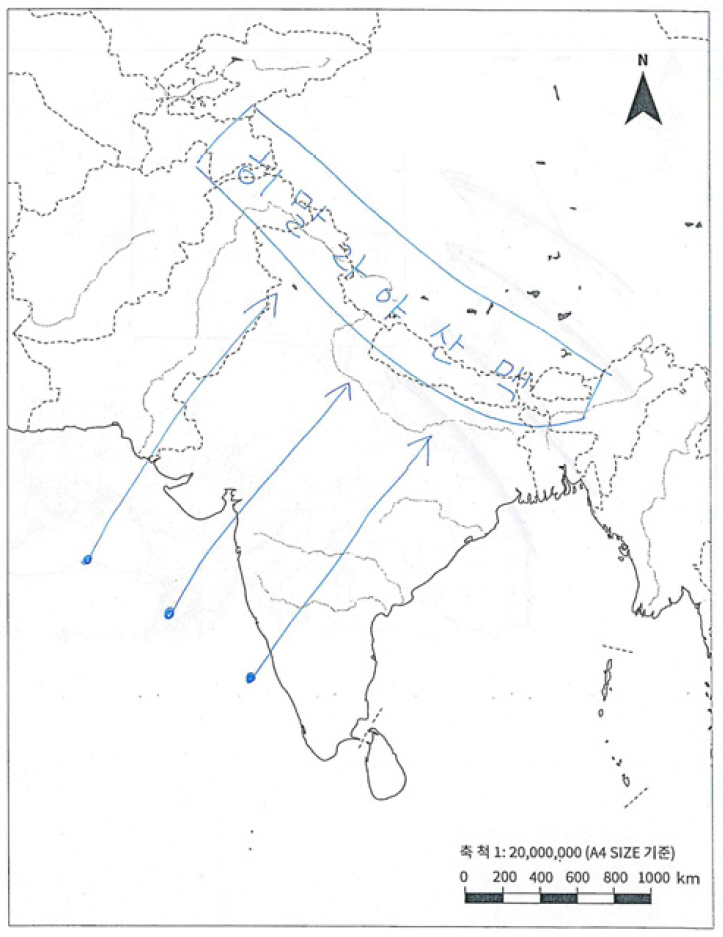
- The purpose of this study was to examine the applicability of AI-based automated scoring for text- and image-based responses in geography assessment from the perspective of reliability. To this end, a restricted-response text item, an extended-response text item, and an image-based item were developed for a high school World Geography course. Responses from 85 high school students were automatically scored using Gemini and GPT models. The AI-generated scores were then compared with scores assigned by five in-service geography teachers to analyze the intra-rater and inter-rater reliability of AI-based automated scoring. The results showed that the reliability of AI-based automated scoring varied by item type and model. First, for the restricted-response text item, both AI models demonstrated high intra-rater and inter-rater reliability. Second, for the extended-response text item, intra-rater reliability was good, whereas inter-rater reliability was lower than the reliability among the teachers. Both AI models also assigned lower scores than the teachers, with GPT exhibiting a particularly strict scoring tendency. Third, for the image-based item, GPT demonstrated high intra-rater reliability and inter-rater reliability approaching the level observed among the teachers. In contrast, Gemini showed moderate intra-rater and inter-rater reliability because of instability in handling blank responses. However, when blank responses were recoded as zero, both reliability measures improved to at least a satisfactory level. By demonstrating that AI-based automated scoring achieved meaningful levels of intra-rater and inter-rater reliability for text- and image-based responses in geography assessment, this study provides empirical evidence for expanding the scope of its application in geography education. Nevertheless, its use requires careful consideration of multiple factors, including prompt design tailored to item types and response characteristics, procedures for handling exceptional responses, and the incorporation of teacher review.
- COLLAPSE
본 연구의 목적은 지리과 텍스트 및 이미지 답안에 대한 AI 자동 채점의 적용 가능성을 신뢰도 측면에서 검증하는 것이다. 이를 위해 고등학교 「세계지리」 과목을 대상으로 제한형, 확장형 텍스트 문항 및 이미지 기반 문항을 개발하고, 해당 문항에 대한 고등학생 85명의 답안을 Gemini와 GPT 모델을 활용하여 자동 채점하였다. 이후 AI 채점 결과를 현직 지리 교사 5명의 채점 결과와 비교하여 AI 자동 채점의 평가자 내 신뢰도와 평가자 간 신뢰도를 분석하였다. 분석 결과, AI 자동 채점의 신뢰도는 문항 유형과 모델에 따라 차이가 있었다. 첫째, 제한형 텍스트 문항에서는 두 AI 모델 모두 평가자 내 신뢰도와 평가자 간 신뢰도가 높게 나타났다. 둘째, 확장형 텍스트 문항에서는 평가자 내 신뢰도는 양호하였으나, 평가자 간 신뢰도는 교사 간 신뢰도보다 낮게 나타났다. 또한 두 AI 모델 모두 교사보다 낮은 점수를 부여하였으며, 특히 GPT의 엄격한 채점 경향이 두드러졌다. 셋째, 이미지 기반 문항에서는 GPT의 경우 높은 평가자 내 신뢰도와 교사 간 신뢰도에 근접한 평가자 간 신뢰도가 확인되었다. 반면 Gemini는 공백 답안 처리의 불안정성으로 평가자 내 및 평가자 간 신뢰도가 중간 수준이었으나, 공백 답안을 0점으로 보정한 경우 일정 수준 이상으로 개선되었다. 본 연구는 지리과의 텍스트 및 이미지 기반 답안에 대한 AI 자동 채점이 의미 있는 수준의 평가자 내 및 평가자 간 신뢰도를 확보하였다는 점에서 지리교육 평가에 AI 자동 채점의 적용 범위를 확장할 수 있는 실증적 근거를 제시한다. 다만 문항 유형과 답안 특성에 적합한 프롬프트 설계, 예외 답안 처리, 교사 검토 절차 도입 등 다양한 측면을 주의 깊게 고려하여 활용할 필요가 있다.
-
A Reliability Analysis of AI-Based Automated Scoring for Text- and Image-Based Responses in Geography Assessment
-
Research Article
-
The Influence and Characteristics of Changes in Geographic Knowledge on Pre-Service Geography Teachers’ through Fieldwork Activities
답사활동이 예비 지리교사의 지리 지식변화에 미치는 영향과 특성 - ‘호남지역지리’ 수업을 중심으로 -
-
Sungwook Cho
조성욱
- In this study, the effect of geographic fieldwork on the changes of pre-service geography teachers’ was examined through geographic fieldwork activities conducted …
이 연구에서는 지역학습 과목인 ‘호남지역지리’ 수업 중 이루어진 답사활동을 통해서, 답사가 예비 지리교사의 지리 지식변화에 미치는 효과를 살펴보았다. 강의 중 4번의 답사를 …
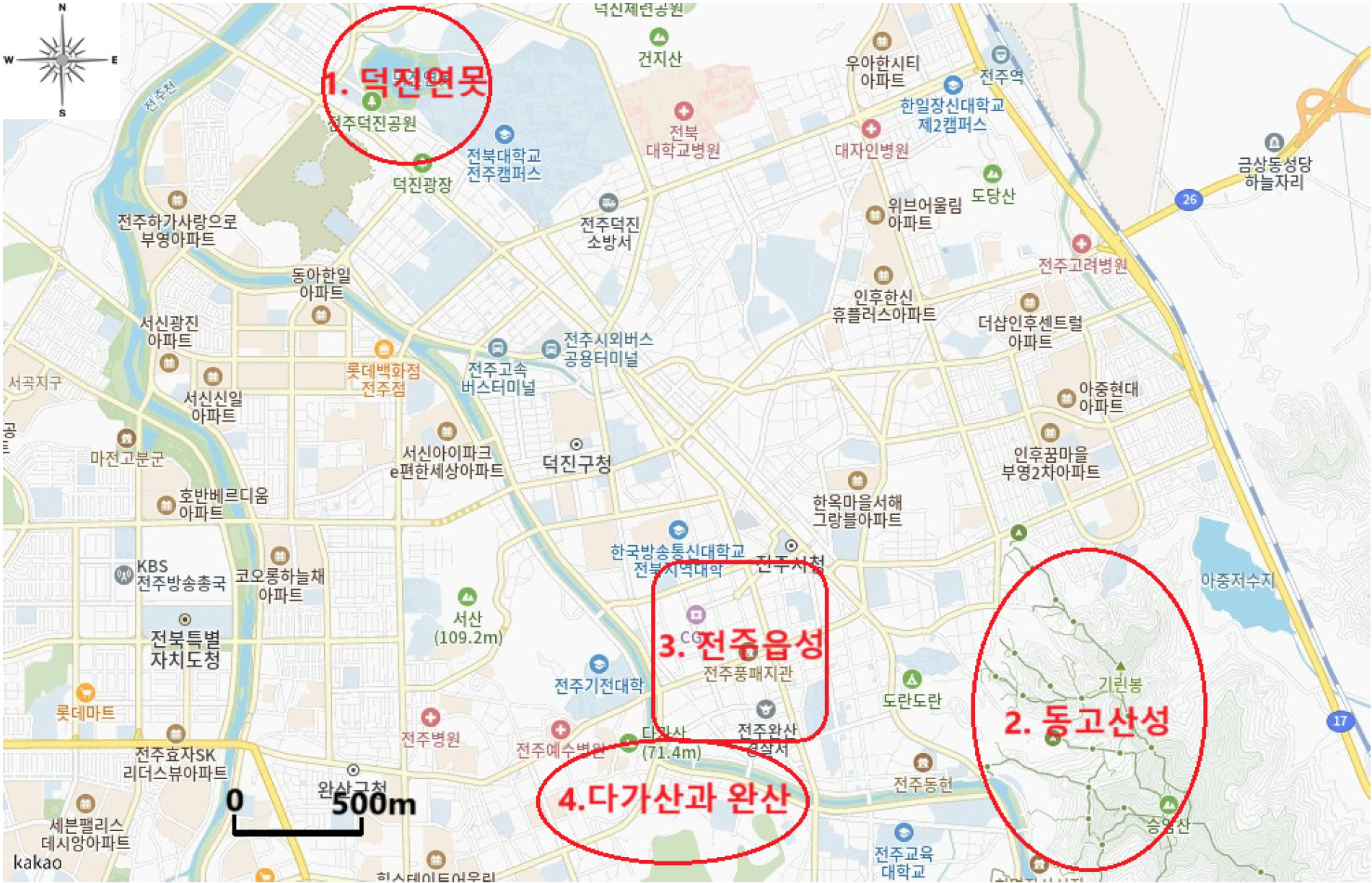
- In this study, the effect of geographic fieldwork on the changes of pre-service geography teachers’ was examined through geographic fieldwork activities conducted during the ‘Honam Regional Geography’ class. As a result of the study, first, prior learning conducted before the geographic fieldwork played an important role in the quantitative aspect of knowledge. Prior learning played a role in improving the basic level of conversation by evenly increasing the quantitative differences in knowledge among learners about the geographic fieldwork area and leading to changes in the quality of knowledge through geographic fieldwork. Second, a change in the quality of knowledge appeared. Quantitative expansion of knowledge through prior learning and geographic fieldwork was linked to one's existing theoretical knowledge, resulting in a restructuring of knowledge. In this process, the existing knowledge was reinforced and changed to practical knowledge, resulting in a change in the perspective of viewing the region and a pedagogical transformation. Third, there were differences according to personal geography. In the case of the first visit, the quantitative aspect was large, and in the multiple visit, the qualitative aspect was changed. And through the geographic fieldwork, a new sense of “my region” was formed and it shifted toward developing a sense of place and participatory thinking, such as recognizing local issues and considering solutions.
- COLLAPSE
이 연구에서는 지역학습 과목인 ‘호남지역지리’ 수업 중 이루어진 답사활동을 통해서, 답사가 예비 지리교사의 지리 지식변화에 미치는 효과를 살펴보았다. 강의 중 4번의 답사를 실시했으며, 3가지 측면에서 변화와 특성을 살펴봤다. 연구 결과는, 첫째, 답사 이전에 이루어진 사전학습은 지식의 양적 측면에서 중요한 역할을 했다. 사전학습은 답사지역에 대한 학습자 간 지식의 양적 차이를 고르게 상승시켜 대화의 기본 수준을 향상시키는 효과와 답사를 통한 지식의 질적변화를 이끄는 역할을 했다. 둘째, 지식의 질적인 변화가 나타났다. 사전학습과 답사를 통한 지식의 양적 확대는 기존에 자신이 가지고 있었던 이론적 지식과 연결되어 지식의 재구조화가 나타났다. 이 과정에서 기존의 지식을 강화하고, 실천적 지식으로 변화하면서, 지역을 보는 관점의 변화와 교수학적 변환을 가져왔다. 셋째, 개인지리에 따라 차이가 있었다. 처음 방문의 경우 양적 측면에서의 변화가 컸고, 2차 이상 방문에서는 질적 측면에서 변화가 나타났다. 그리고 답사를 통하여 답사지역이 나의 지역이라는 새로운 느낌이 형성되었고, 지역문제를 인식하고 해결방안을 생각하는 등 장소감 형성과 참여형의 사고로 변화했다.
-
The Influence and Characteristics of Changes in Geographic Knowledge on Pre-Service Geography Teachers’ through Fieldwork Activities
-
Research Article
-
Possibilities and Limits of University Geography Education as a Convergence Course - A Case Study on the Design and Implementation of a Geography-Centered Humanities-Social Sciences Convergence Course -
융합 교과로서의 대학 지리교육의 가능성과 한계 - 지리학 중심 인문사회 융합 교과 설계·운영 사례연구 -
-
Minji Kim · Mijin Lee · Miae Ahn
김민지 · 이미진 · 안미애
- This study examines the course “Cultural Landscape and the Rediscovery of Place,” a humanities-social sciences convergence curriculum centered on geography, by jointly …
본 연구는 지리학이 중심이 된 인문·사회 융합 교과목인 「문화경관과 장소의 재발견」을 사례로, 교과 설계·운영 자료(강의계획서, 주차별 강의자료, 과제 설계)와 학습자 인식 자료를 …
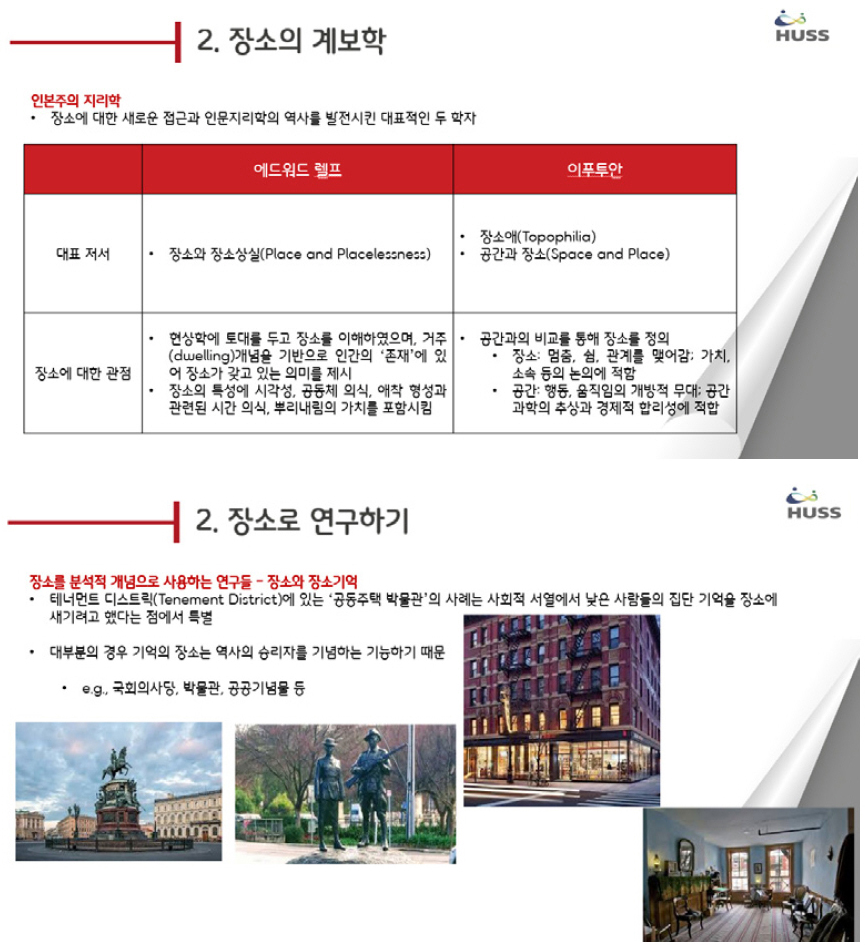
- This study examines the course “Cultural Landscape and the Rediscovery of Place,” a humanities-social sciences convergence curriculum centered on geography, by jointly reviewing curriculum design and implementation records (syllabus, weekly course materials, assignment design) alongside learner perception data, in order to empirically analyze the gap between the way “convergence” is professed and the way it is actually implemented and perceived in university geography education. The course was delivered through sequential team teaching across geography, Korean linguistics, and classical Chinese literature, with each discipline led by a different instructor for roughly five weeks in turn — a structure typical of convergence courses in Korean universities, which lends this case its representativeness. The analysis shows that under this sequential team-teaching structure, learners perceived the course less as a chemically integrated convergence and more as a multidisciplinary arrangement of “three disciplinary contents laid out in parallel.” A Spearman rank-order correlation revealed a strong positive association between learners’ perceived gains in convergent thinking and their perception of the course’s adequacy as a convergence course, a paradox suggesting that perceived quality of individual disciplinary sessions and the actual realization of interdisciplinary integration may be independent of one another. Nevertheless, learners strongly endorsed the necessity of convergence education itself, and their recognition of geography’s core concepts “place” and “cultural landscape” was embraced consistently across majors and genders, confirming geography’s potential to function as an interdisciplinary hub. To address the limitations of this physical combination, the study also presents the actual implementation of an integrated capstone assignment (an urban regeneration and place-marketing proposal) that was built into the course from the design stage; students reported that this assignment helped them review and apply their understanding across all three disciplines, demonstrating that integrated assignments can serve as a practical attempt to partially offset the limitations of sequential team teaching. However, the extent to which this potential can be realized through improvements in actual operational practice cannot be determined from the present data alone, and further verification of the expanded application and effectiveness of integrated assignments is needed. These findings indicate that for humanities-social sciences convergence education to be successfully established in university geography education, geography’s core concepts must be explicitly positioned from the design stage as an epistemological hub that genuinely connects knowledge across disciplines, and integration must be extended beyond sequential relay-style team teaching into integrated assignments and integrated assessment throughout the course design.
- COLLAPSE
본 연구는 지리학이 중심이 된 인문·사회 융합 교과목인 「문화경관과 장소의 재발견」을 사례로, 교과 설계·운영 자료(강의계획서, 주차별 강의자료, 과제 설계)와 학습자 인식 자료를 함께 검토하여 대학 지리교육에서 ‘융합’이 표방되는 방식과 실제로 구현·지각되는 방식 사이의 간극을 실증적으로 분석하였다. 이 교과목은 지리학·국어학·한문학 세 전공 교수자가 각 5주 내외씩 순차적으로 담당하는 팀 티칭 방식으로 운영되었으며, 이러한 구조는 국내 다수의 융합 교과목이 채택하고 있는 전형적인 운영 방식이라는 점에서 사례로서의 대표성을 갖는다. 분석 결과, 순차적 팀 티칭 구조 하에서 학습자들은 이 교과목을 화학적으로 결합된 융합보다는 다학제적으로 ‘병렬적으로 나열된 세 개의 전공 지식’으로 지각하고 있었다. Spearman 순위상관분석 결과, 학습자의 융합적 사고 향상 지각과 해당 교과목의 융합 교과로서의 적절성에 대한 인식 간에는 강한 정적 상관관계가 나타났으나, 이는 역설적으로 개별 전공 강의의 완성도에 대한 인식과 학문 간 실제 통합의 실현 여부가 별개일 수 있음을 보여준다. 그럼에도 학습자들은 융합 교육의 필요성 자체에는 깊이 공감하고 있었으며, 지리학의 핵심 개념인 ‘장소’와 ‘문화경관’에 대한 인식은 전공 계열과 성별에 따른 차이 없이 보편적으로 수용되고 있어 지리학이 학제적 허브로 기능할 잠재력을 확인하였다. 본 연구는 이러한 물리적 결합의 한계를 보완하기 위해 강의 설계 단계에서부터 포함된 ‘도시재생 및 장소마케팅 제안서’ 통합형 과제의 실제 운영 사례를 함께 제시하였는데, 수강생들은 이 과제를 통해 세 전공 지식의 이해도를 스스로 점검하고 활용하는 경험을 하였다고 응답하여, 통합형 과제가 순차적 팀 티칭의 한계를 부분적으로 보완할 수 있는 실천적 시도가 될 수 있음을 보여주었다. 다만 이러한 잠재력이 실제 운영 방식의 개선을 통해 어느 수준까지 실현될 수 있는지는 본 연구의 자료만으로 단정하기 어려우며, 통합형 과제의 확대 적용과 그 효과에 대한 후속 검증이 필요하다. 이상의 결과는 대학 지리교육에서 인문·사회 융합 교육이 성공적으로 정착하기 위해서는 지리학의 핵심 개념을 교과 설계 단계에서부터 학문 간 지식을 실제로 연결하는 인식론적 허브로 명시적으로 위치시키고, 순차적 릴레이형 팀 티칭을 넘어 통합형 과제와 통합 평가를 설계 전반에 반영해야 함을 보여준다.
-
Possibilities and Limits of University Geography Education as a Convergence Course - A Case Study on the Design and Implementation of a Geography-Centered Humanities-Social Sciences Convergence Course -
-
Research Article
-
Climate Change Education in Addis Ababa Primary Textbooks and Directions for Revision - Supplementary Implications from Korean Environmental and Climate Education Materials -
아디스아바바 초등 교과서의 기후변화교육 구성과 개정 방향 - 한국 환경·기후교육 자료의 보완적 시사점 -
-
Bethel Ghebru · Hyejin Bak
게브루 베텔 · 박혜진
- This study examines how climate change education is organized in Grade 4–6 Environmental Science textbooks published by the Addis Ababa City Administration …
본 연구는 아디스아바바시 교육청의 4–6학년 환경과학 교과서에 나타난 기후변화교육의 구성적 특징과 한계를 분석하고, 한국의 선별된 환경·기후교육 자료를 보완적으로 검토하여 교과서 개정 방향을 …
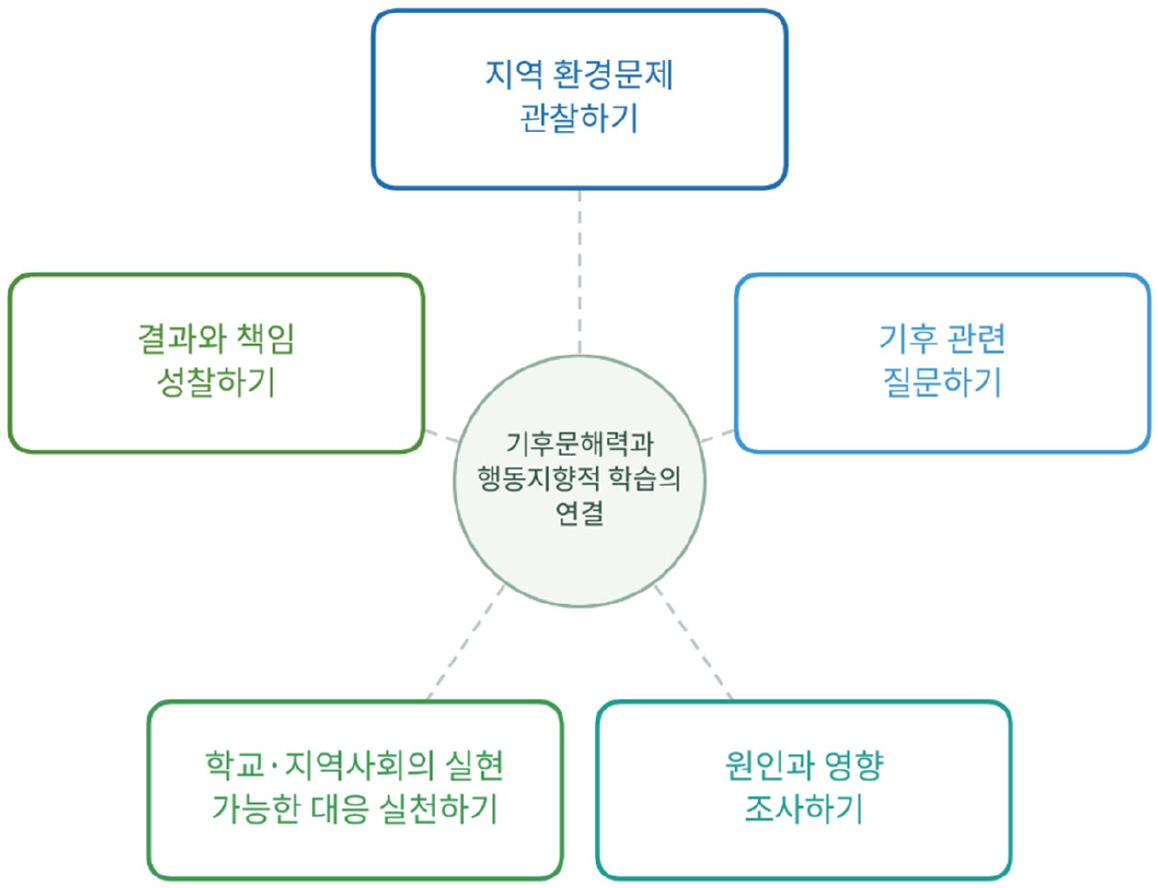
- This study examines how climate change education is organized in Grade 4–6 Environmental Science textbooks published by the Addis Ababa City Administration Education Bureau and proposes context-sensitive directions for textbook revision. Using qualitative content analysis, 241 climate-relevant units identified across three Amharic textbooks were examined through six dimensions: climate science, climate impacts, climate responses, teaching and learning practices, localization and place, and policy and justice. The findings show that the textbooks already contain substantial material related to climate change and a distinctive spatial progression from Addis Ababa to Ethiopia and East Africa. However, climate science, impacts, responses, place, inquiry, and participation are not consistently connected, resulting in an incomplete and fragmented construction of climate literacy. Selected Korean curriculum, policy, and teaching materials were reviewed only as supplementary comparative sources rather than as a normative or transferable model. Based on the theoretical framework and the Addis Ababa textbook analysis, the study proposes an “Awareness-to-Action” curriculum design heuristic that can selectively connect observation, questioning, investigation, feasible response, and reflection. The central implication is that revision should prioritize connecting and reorganizing existing locally grounded content rather than replacing it with an externally derived model.
- COLLAPSE
본 연구는 아디스아바바시 교육청의 4–6학년 환경과학 교과서에 나타난 기후변화교육의 구성적 특징과 한계를 분석하고, 한국의 선별된 환경·기후교육 자료를 보완적으로 검토하여 교과서 개정 방향을 제안하였다. 세 권의 암하라어 교과서에서 확인된 241개 분석 단위를 기후과학, 영향, 대응, 교수·학습 및 실천, 지역화와 장소성, 정책 및 정의 관점의 여섯 차원으로 분석하였다. 분석 결과, 기후 관련 내용과 도시–국가–지역의 공간적 구성은 풍부하지만 기후과학·영향·대응과 장소·탐구·참여의 연결은 불완전하였다. 한국 자료는 규범적 모델이 아니라 제한적 비교자료로 활용하였다. 이에 기존 내용을 대체하기보다 명시적으로 연결·재조직하고, 관찰·질문·조사·대응·성찰을 선택적으로 결합하는 ‘인식에서 행동으로’ 설계 휴리스틱을 제안하였다.
-
Climate Change Education in Addis Ababa Primary Textbooks and Directions for Revision - Supplementary Implications from Korean Environmental and Climate Education Materials -
-
Research Article
-
Characteristics and Implications of the Geography Curriculum in Finnish Elementary Environmental Studies
핀란드 초등 「환경과」 지리 영역 교육과정의 특성 및 함의
-
Khan Yong Lee
이간용
- This study aims to elucidate the characteristics of the geography domain in the Finnish elementary ‘Environment (Ympäristöoppi)’ subject through curriculum and textbook …
본 연구는 핀란드 초등 ‘환경과(Ympäristöoppi)’ 지리 영역의 교육과정과 교과서 분석을 통해 그 특성을 밝히고, 우리나라 초등사회과 지리교육에 주는 시사점을 도출하고자 하였다. 이를 …
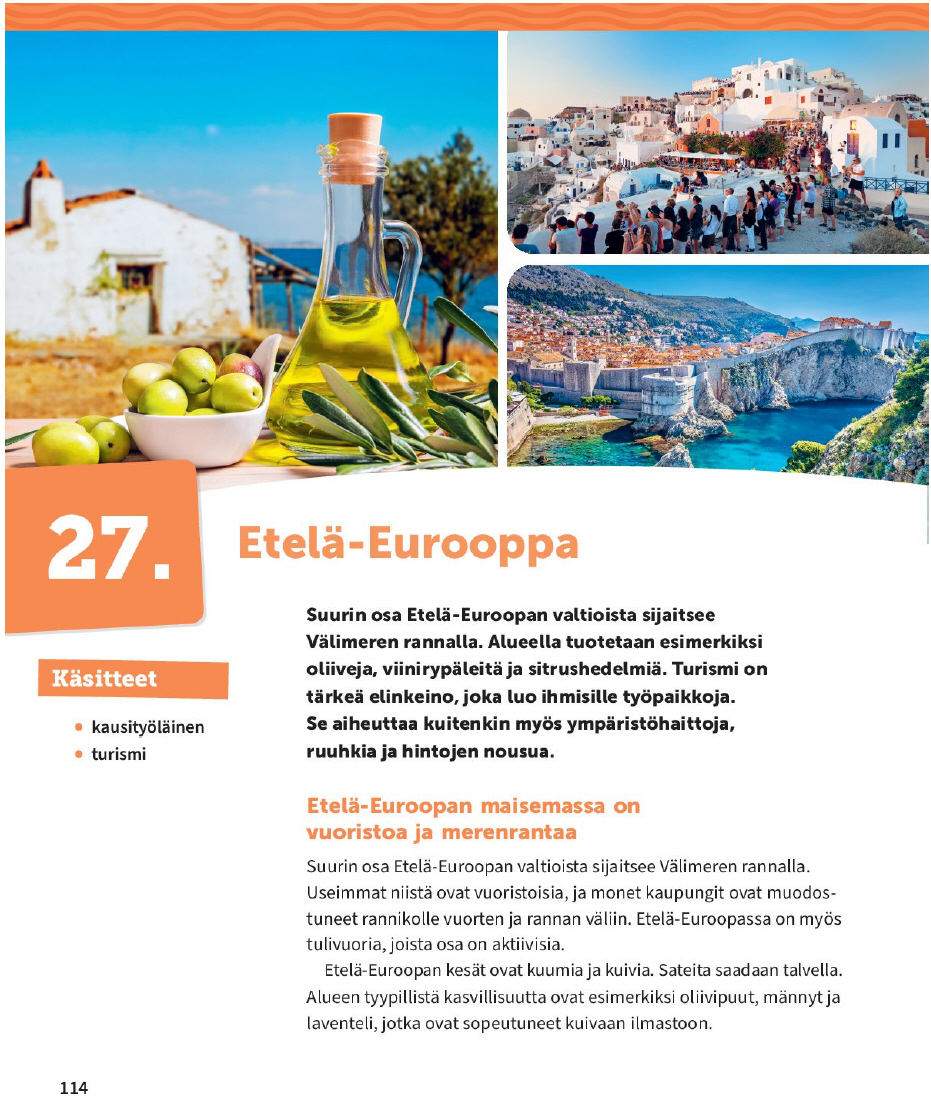
- This study aims to elucidate the characteristics of the geography domain in the Finnish elementary ‘Environment (Ympäristöoppi)’ subject through curriculum and textbook analysis, deriving implications for South Korean elementary social studies. To this end, the study examined the content structure, teaching objectives, transversal competencies, and evaluation criteria of the Finnish National Core Curriculum (POPS 2014), alongside a textbook unit on ‘Southern Europe.’ The results indicate that Finnish elementary geography expands its spatial scope from local living environments to the global scale, deepens learning from observation to inquiry and interpretation, and emphasizes human-environment interactions and sustainability. Notably, ‘inquiry’ is established as an independent content area. The explicit inclusion of fieldwork, geographical thinking, maps, and geomedia in objectives and assessments maintains the subject's distinct identity. Furthermore, the textbooks structurally expand from natural environments to industrial activities and human migration, enabling students to understand regional formation and transformation in connection with global phenomena. These findings provide meaningful implications for complementing the logic of regional learning in South Korea. They suggest strengthening inquiry and fieldwork, linking geomedia to geographical thinking, and exploring regional changes within global contexts. In addition, Finland’s practice of implementing at least one multidisciplinary learning module each year could provide a useful reference for developing a practical alternative to an integrated-subject approach.
- COLLAPSE
본 연구는 핀란드 초등 ‘환경과(Ympäristöoppi)’ 지리 영역의 교육과정과 교과서 분석을 통해 그 특성을 밝히고, 우리나라 초등사회과 지리교육에 주는 시사점을 도출하고자 하였다. 이를 위해 핀란드 국가핵심교육과정(POPS 2014)의 환경과 내용 체계, 교수 목표 및 범교과 역량, 평가를 분석하고, 실제 교과서의 ‘남유럽’ 단원을 검토하였다. 분석 결과, 핀란드의 초등 지리교육은 생활환경에서 세계로 공간적 범위를 확대하고, 관찰과 경험에서 탐구와 해석으로 학습을 심화하며, 자연환경과 인간 활동의 상호작용 및 지속가능성을 주요 내용으로 구성하고 있었다. 특히 ‘탐구’가 독립적인 내용 영역으로 설정되고, 야외학습과 지리적 사고, 지도 및 지오미디어 활용이 교수 목표와 평가에 명시되어 지리교육의 고유한 성격을 유지하고 있었다. 교과서에서도 자연환경에서 출발하여 생산·산업활동, 인간의 이동, 사회·환경적 영향으로 내용을 확장함으로써 지역의 형성과 변화, 그리고 이를 지구적 현상과 연계하여 이해하도록 구성하였다. 이러한 결과는 우리나라 초등사회과 지리교육에서도 탐구와 야외 학습을 강화하고, 지도·지오미디어 활용을 지리적 사고와 연계하며, 지역의 형성과 변화를 지구적 현상과의 관계 속에서 탐구하도록 지역 학습의 논리를 보완하는 데 유의미한 시시점을 제공한다. 또한 핀란드의 연 1회 이상 다학제 학습 모듈 운영 방식의 기본 아이디어는 통합교과의 현실적 대안으로 참고할 수 있을 것이다.
-
Characteristics and Implications of the Geography Curriculum in Finnish Elementary Environmental Studies

Journal Informaiton
 The Journal of The Korean Association of Geographic and Environmental Education
The Journal of The Korean Association of Geographic and Environmental Education







 The Korean Association Of Geographic And Environmental Education
한국지리환경교육학회
(06639) 96 Seochojungang-ro, Seocho-gu, Seoul (1650 Seocho-dong) Seoul National University of Education
Tel: +82-2-3475-2436 / E-mail: kageeedit@naver.com Copyright© The Korean Association Of Geographic And Environmental Education. Powered by APUB
Tel: +82-2-3475-2436 / E-mail: kageeedit@naver.com Copyright© The Korean Association Of Geographic And Environmental Education. Powered by APUB